
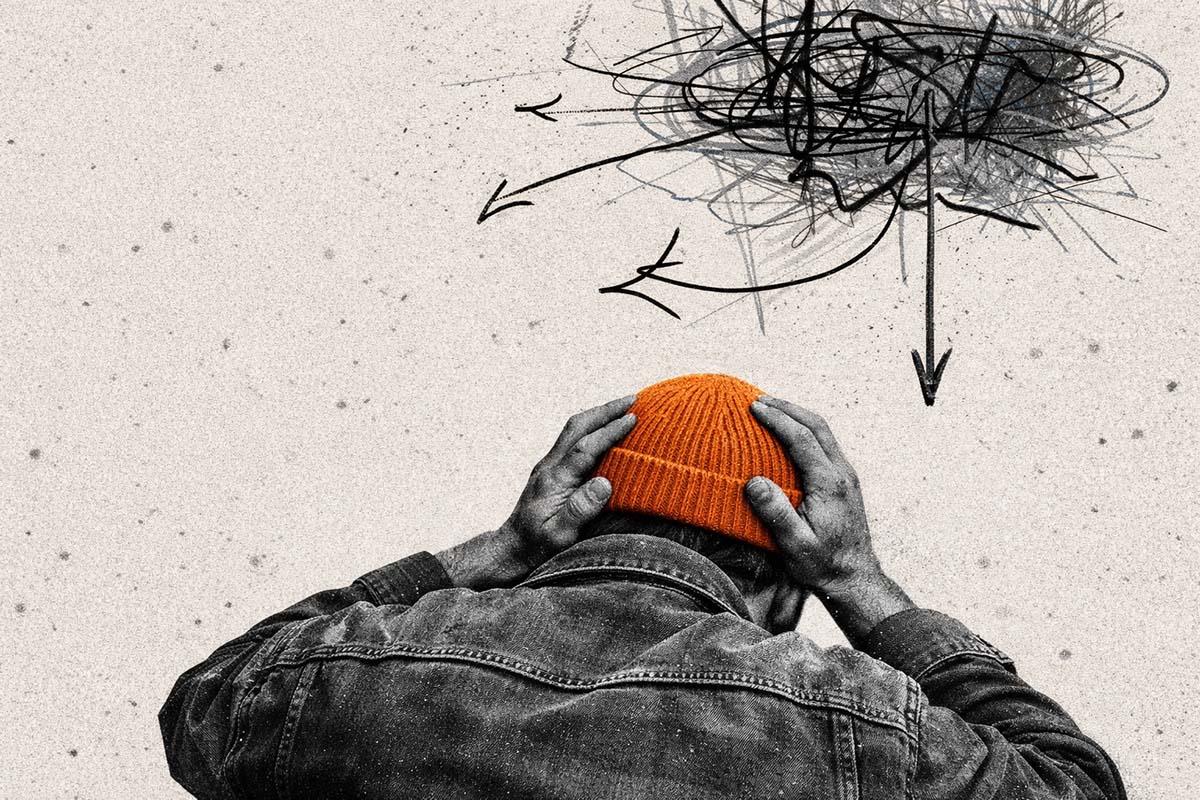
Interestingly, creativity does not require the complete absence of pressure. A moderate level of tension can sharpen attention and enhance focus. The difficulty begins when pressure ceases to be temporary and instead becomes the background condition of everyday work.
Research across film and media sectors shows that burnout, anxiety and emotional exhaustion occur significantly more often in these professions than in many others. In some surveys, more than sixty percent of professionals report that their work negatively affects their mental health. For a time, this pressure may even feel invigorating. Many creative teams run on adrenaline: a deadline approaches, the room fills with ideas, and something unexpectedly brilliant emerges. But when pressure becomes constant, the nervous system begins to respond differently. Creativity starts to diminish.
Why Stress Slowly Narrows Creative Thinking
Short bursts of pressure can sharpen attention. Chronic pressure does the opposite. When the nervous system stays in a constant state of stress, the brain begins to focus on avoiding mistakes rather than exploring possibilities. Curiosity fades. Ideas become safer. Feedback starts to feel more personal than it should. Creativity requires a psychological state that allows experimentation and the freedom to get things wrong. Anxiety pushes the mind in the opposite direction: toward control, caution and self-protection.
Carl Jung once wrote that
“the creation of something new is not accomplished by the intellect but by the play instinct.”
Playfulness is difficult to access when the body perceives threat. This creates a familiar paradox within creative industries: innovation is demanded, while the psychological conditions quietly encourage increasingly conservative ideas.
When Work Follows You Home
Creative work rarely remains confined to the workplace. You sit down for dinner and suddenly realise you are mentally rewriting tomorrow’s pitch while your partner is explaining something about their day. You nod. You say “that makes sense.” You have absolutely no idea what they just said. People read bedtime stories to their children while thinking about a client who said the campaign felt “a bit safe.” You are technically present. Just not entirely. Over time, the mind adapts to this state: always slightly alert, always anticipating the next round of feedback. For many creatives, this constant mental activity gradually comes to feel normal.
Why Creative People Are Especially Sensitive to Pressure
Creative work attracts people who are curious, perceptive and emotionally responsive. These qualities help people notice subtle details and develop strong ideas. They also make the nervous system more responsive to evaluation. In most creative roles, ideas are continually reviewed, discussed, and reshaped. Even when everyone agrees that criticism is “only about the work,” the body does not always register it that way. Part of you created the idea. Part of you hears the reaction. For those who are deeply invested in their work, the boundary between the two can easily blur. Over time, this gives rise to an internal voice familiar to many creatives, the quiet commentator that questions whether an idea is good enough before anyone else has spoken. At times, it echoes the voices of teachers, clients, parents, or colleagues from the past.
Early Signs That Creativity Is Under Strain
Creative burnout rarely begins with a dramatic collapse. More often, it emerges gradually while someone continues to produce competent work. Common signs include:
- Ideas require more effort than before: the process feels heavier, less playful
- Feedback lingers longer: even when you know it concerns the work
- Switching off becomes difficult: the mind continues revising long after the day ends
- Relationships begin to absorb the strain: patience shortens, energy diminishes
These signs do not indicate a loss of creativity. More often, they suggest that the nervous system has been operating at full capacity for too long. It’s hopeful to know that creativity tends to recover surprisingly quickly once the system has space to breathe again.
Why Creatives Keep Returning to the Pressure
Creative industries speak frequently about passion and rightly so. Building something new with a team can be deeply satisfying. Yet there is also a psychological loop that keeps many people within cycles of pressure. Creative work follows an irregular reward pattern. Most ideas fail. Occasionally, one succeeds brilliantly. When it does, a campaign lands, a concept clicks, a client responds enthusiastically, - the experience is intensely rewarding. The brain remembers those moments. That unpredictability keeps people engaged: pressure, effort, uncertainty, and every so often a breakthrough that makes everything feel worth it. Over time, the nervous system may begin to interpret intensity as normal. When a project ends, calm can feel unfamiliar, even uncomfortable. This may explain why people leave a demanding project vowing “never again,” only to return to the same rhythm months later.
Small Ways to Protect Your Creativity
Creative industries are unlikely to become calm overnight. Deadlines and feedback are intrinsic to the work. Yet people often have more influence over their internal environment than they realise. A few small adjustments can make a meaningful difference.
- Create spaces where ideas are not evaluated
Many creatives spend most of their time producing work that will immediately be judged by someone else. The mind needs spaces where ideas can exist without approval. Sketch something no one will see. Write ideas that never become a pitch. Experiment purely out of curiosity. Private creativity reminds the brain that exploration does not always need permission. - Learn to notice when your system is overloaded
Creative people are often trained to push through pressure. But the nervous system eventually stops distinguishing between a challenging project and a permanent emergency. Signals such as irritability, difficulty concentrating or unusually strong reactions to feedback often indicate that the system needs recovery time. These signals are not weakness. They are information. - Separate yourself from the idea
One of the most valuable skills in creative work is learning to separate identity from output. An idea can change, evolve, or be discarded without reflecting on the person who proposed it. A simple internal reminder can help: “The idea is being reviewed. Not me.” - Reintroduce curiosity
Anxiety narrows attention toward mistakes and risks. Curiosity widens it again. Sometimes a small change in questions is enough:
What would happen if we tried something unexpected here? What would I experiment with if nobody needed to approve it?
These questions move the mind out of defensive mode and back into creative thinking. - Talk about the pressure
Creative work can be surprisingly isolating, especially when everyone around you appears to be coping effortlessly. In reality many professionals experience the same pressures but rarely speak about them openly. Conversations with colleagues, mentors or a therapist can help people understand their reactions instead of silently carrying them. And once pressure becomes understandable, it becomes more manageable.
Creativity Is More Resilient Than We Think
I spent more than twenty years in film and advertising before becoming a therapist. I know the excitement of building something new with a team and the satisfaction when an idea finally works. I also know how easily sustained pressure can erode the energy that once made the work enjoyable. Creativity rarely disappears entirely. More often, it withdraws when the nervous system has been under prolonged strain. When people begin to understand how their mind responds to pressure, curiosity often returns more quickly than expected. In many cases, the goal is not to leave creative work. It is to remain within it without losing the part of yourself that made you creative in the first place.
Questions Clients Often Ask Me
Is anxiety always bad for creativity, or can it actually help?
A certain level of pressure can be helpful. It can sharpen focus, increase energy, and help you meet deadlines. The problem is not anxiety itself, but its duration. When pressure becomes constant, the nervous system shifts from exploration to protection. Instead of asking “What could this become?”, the mind starts asking “How do I avoid getting this wrong?” and that’s where creativity begins to narrow.
Why do I take feedback so personally, even when I know it’s about the work?
Because only part of you is in the work. Creative ideas don’t come from a neutral place, they come from your perception, your taste, your internal world. So even when you intellectually understand that feedback is about the project, your nervous system may still register it as something more personal. This is especially true for people who are highly perceptive and invested. Learning to gently separate yourself from what you created is a skill and it takes practice, not willpower.
How do I know if I’m burned out or just having a ‘bad phase’ creatively?
A temporary creative block usually feels frustrating but still contains some curiosity underneath. Burnout feels heavier. Ideas require more effort, feedback lingers longer than usual, and there’s a sense of mental fatigue that doesn’t resolve with rest alone. You might still produce good work but it feels mechanical rather than engaging. In those moments, it’s less about “pushing through” and more about recognising that your system may need recovery before creativity can fully return.